
Design and validation of a financial dashboard to track budgeted hours, consumed hours, and deviations, reducing the need for manual analysis.

Client
Blink.la
Year
2024
Scope
Diseño UX / Diseño UI / Entrevistas exploratorias
Context
Content Studio is a suite of tools designed to automate, control, and track audiovisual productions. The Finance team needed greater visibility into one of the key data points of each project. Data analysis was carried out using external tools.
Problem
The financial analysis depended on manual steps and external tools. Hours were logged in the time tracking module, went through approvals, and then had to be reconciled against the corresponding budget.
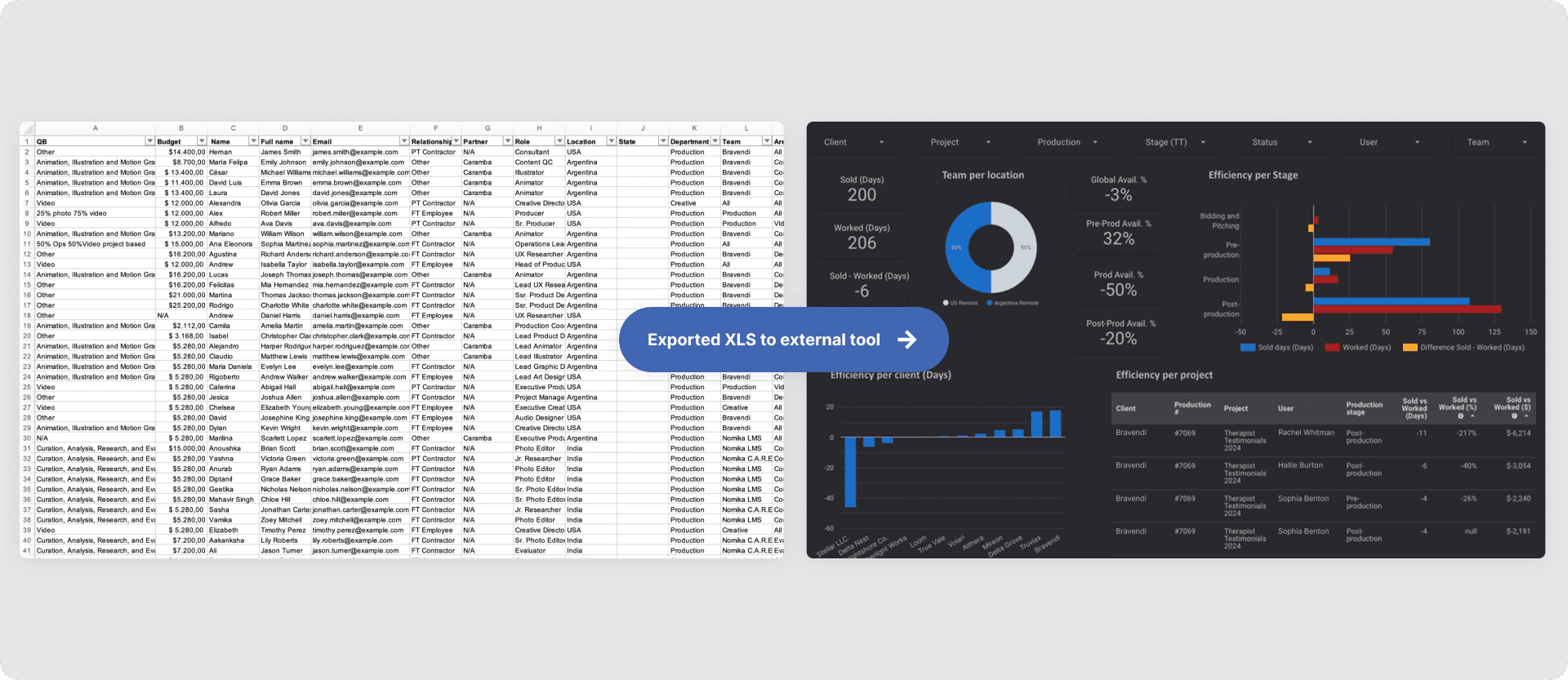
To create visibility, the team downloaded the data as CSV files, uploaded them to an external dashboard, and reviewed deviations in weekly meetings.
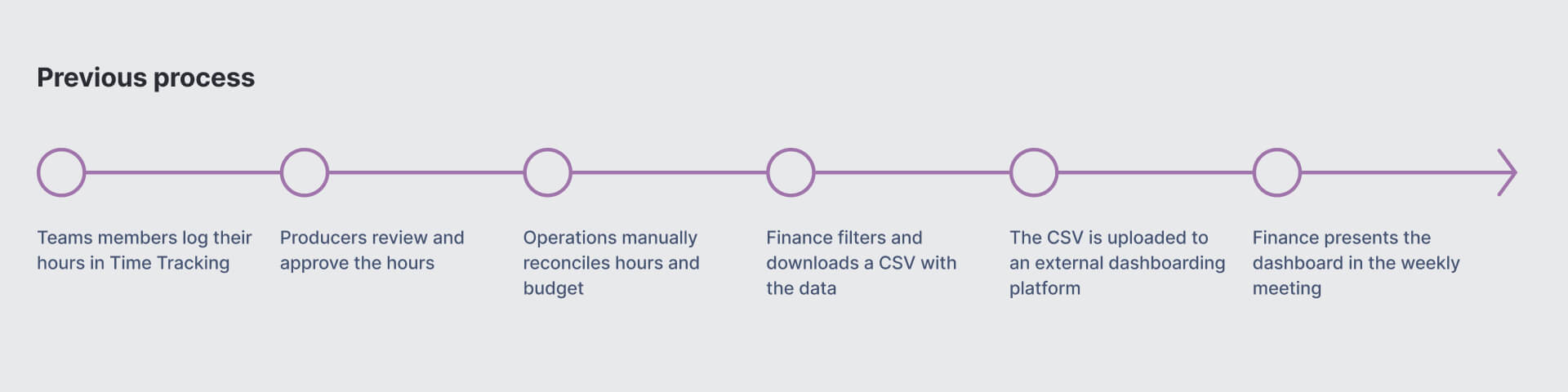
This created three main problems:
Fragmented information
The data needed to understand the financial status of a production was spread across different modules, spreadsheets, and external dashboards.
Lack of early visibility
Deviations between worked hours and budget were detected late, when the Finance team carried out its weekly review.
Manual operational process
The team relied on exports, data cross-checking, and meetings to understand which productions were on track or over budget.
Goals
Integrate the financial dashboard into Content Studio.
Enable early alerts through visual indicators and notifications.
Simplify the reconciliation of pending hours.
Improve the Finance team’s efficiency in detecting and tracking issues.
Design approach
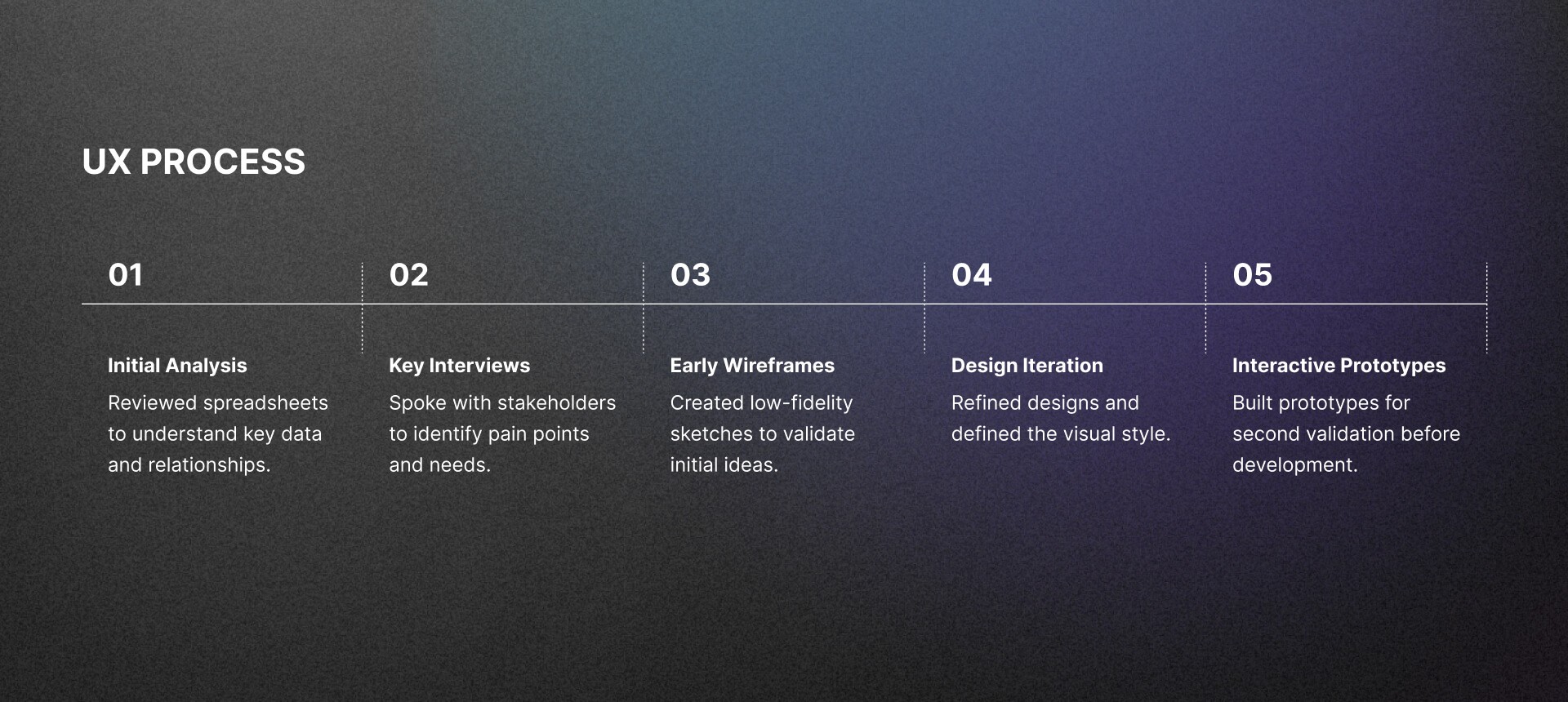
The analysis showed that the problem was not only about visualizing data, but also about connecting different parts of the workflow: time tracking, approvals, budget, reconciliation, and financial monitoring.
Solution
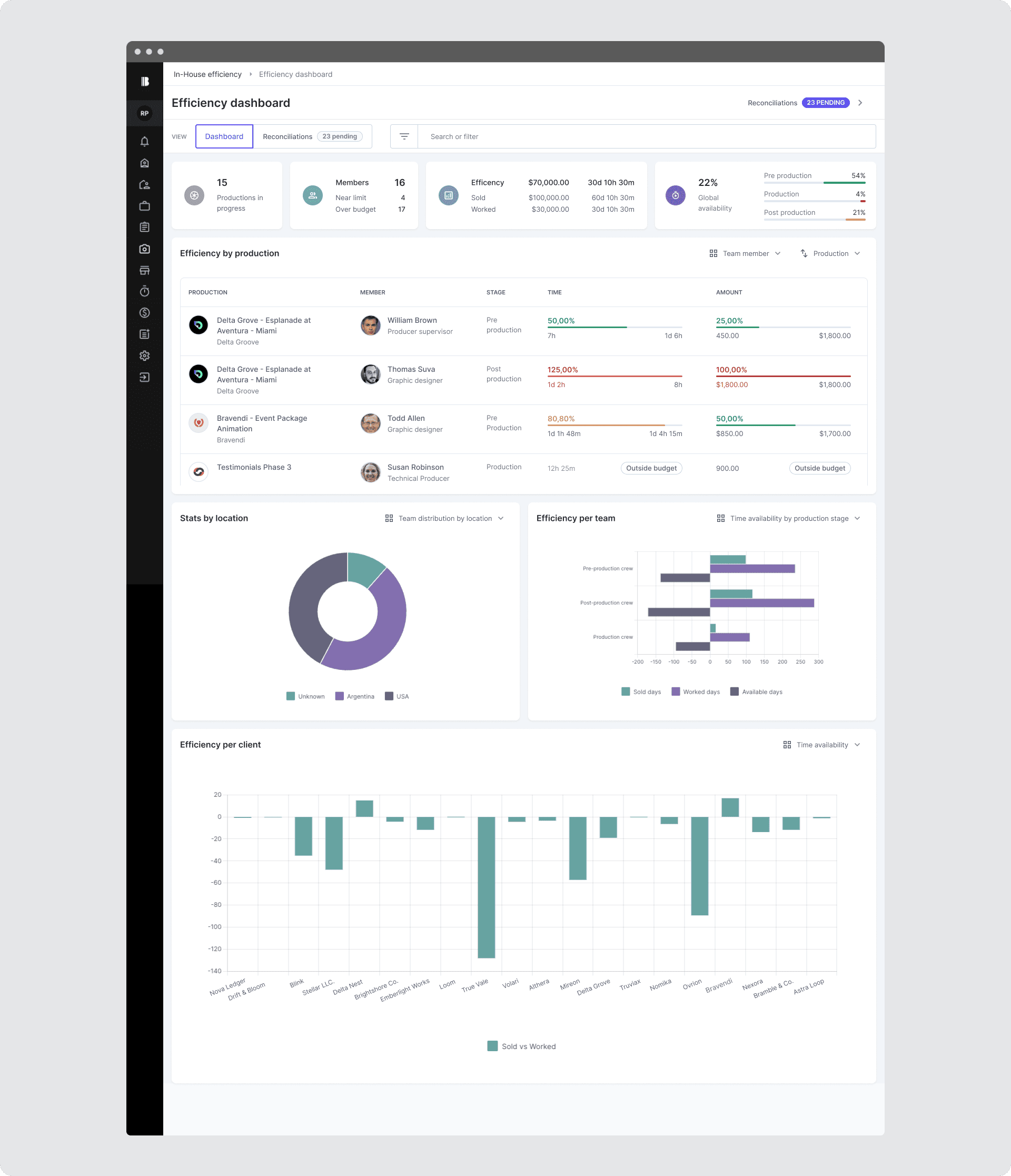
We designed a dashboard within Content Studio to compare budgeted hours, consumed hours, and costs associated with each production.
Hours reconciliation flow
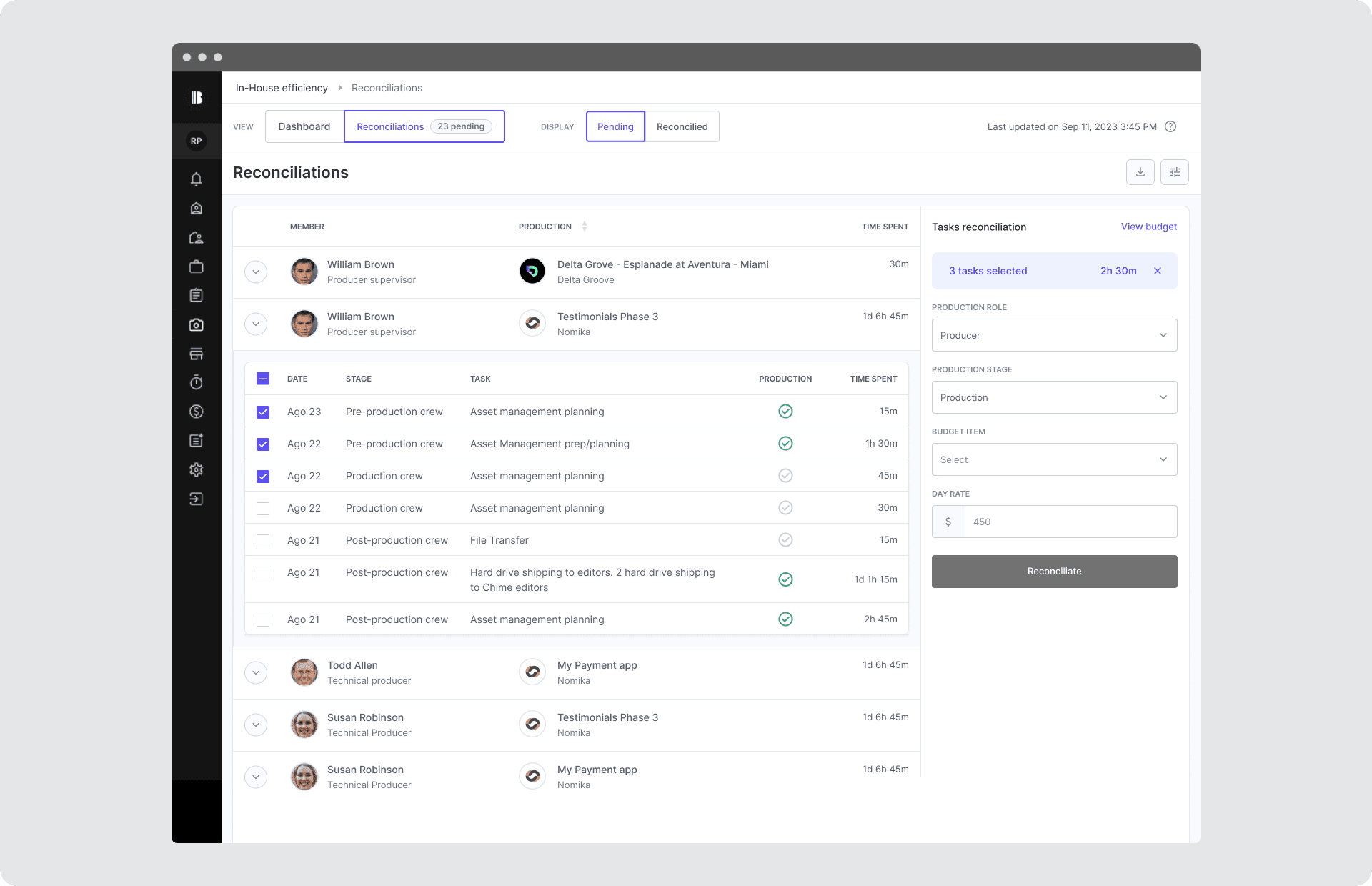
In addition to the dashboard, we designed a reconciliation view to review hours, costs, and statuses associated with each production.
This view allowed the team to move from general monitoring to operational review, clearly distinguishing between pending, approved, and reconciled information.
Stakeholder validation
We validated the proposal with Finance and Operations to assess whether the flow covered the main actions in the process:
Identify unreconciled hours.
Select pending tasks.
Assign each task to the corresponding budget item.
Update reconciliations.
Analyze the overall status from the dashboard.
The review helped adjust the information hierarchy, strengthen statuses and visual indicators, and better connect the dashboard with daily operations.
Results
Integrated flow
The need for manual exports to external tools was eliminated.
Early deviation detection
Overuse or underuse of time and budget misalignments can be quickly identified.
Structured follow-up
Issues are reviewed periodically in weekly meetings.
Simplified cost approval
The detection and bulk approval of pending costs was made easier.